Click below on the animal you wish to research or just scroll through them.
Gray Squirrels | Flying Squirrels | Bats | Snakes | Raccoons | Opossums | Armadillos | Birds | Moles | Beaver | Rats | Stinging Insects | Honeybees | Wasps | Yellow Jackets | Hornets
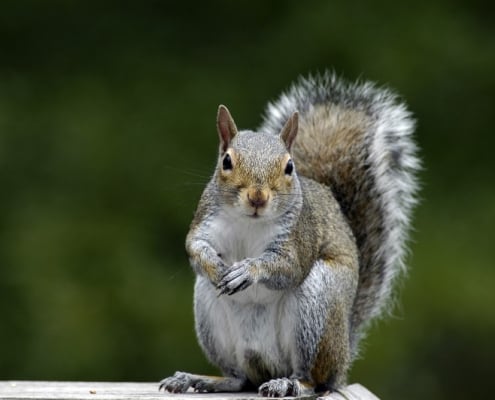
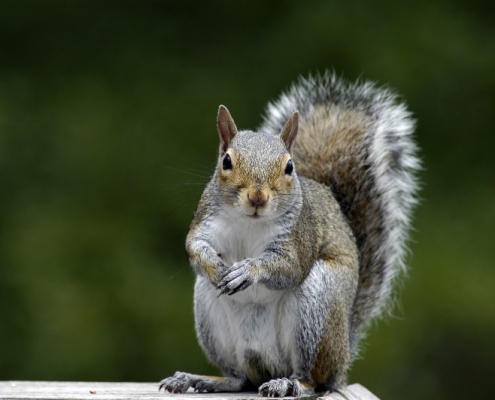
Gray Squirrels
These
are the most common squirrels people see in the yard or around the birdfeeder
in Georgia. They are primarily diurnal (active by day). Gray squirrels mate
in spring or fall. They can have two litters per year. They have 2-6 young
per litter, averaging 2-3. The young are born altricial (not capable of
fending for themselves) and usually stay with the mother for about 20 weeks.
Gray squirrels live for an average of five to six years.Squirrels can be pests when they take over birdfeeders, ruin garden vegetables, eat pecan crops and nest in attics. This type of squirrel is the most common pest animal we control through fall and winter. Many people find the sound of squirrels running across the attic to be haunting. They can cause structural damage by chewing entries, damage stored goods in the attic and cause fire hazard by chewing on electrical wires.
Control Methods: Inspection to identify all possible entries, trapping and exclusion to prevent future problems.
back to menu
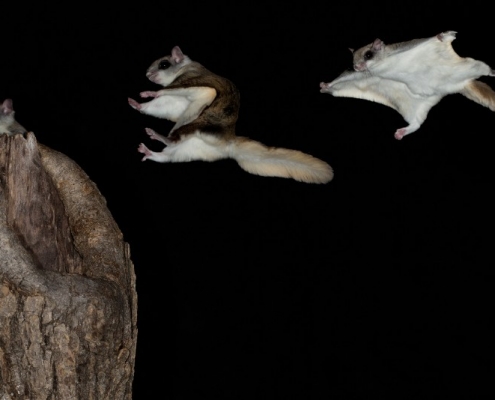
Southern Flying Squirrel
Flying
squirrels are actually gliders. They start on a high tree or other platform
and glide to the desired spot. They can glide over 75 yards. Flyers are
primarily nocturnal (active at night). These are the smallest of the tree
squirrels. They usually live in family groups. Reproduction usually takes
place in the fall. Mothers will have 2-6 young per litter, averaging three.
In the wild they usually live up to five years.Flying squirrels can cause the same damage to a structure as Gray squirrels. They are most often heard in attics in the night.
Control Methods: Inspection to identify all possible entries, trapping and exclusion to prevent future problems.
back to menu
Bats
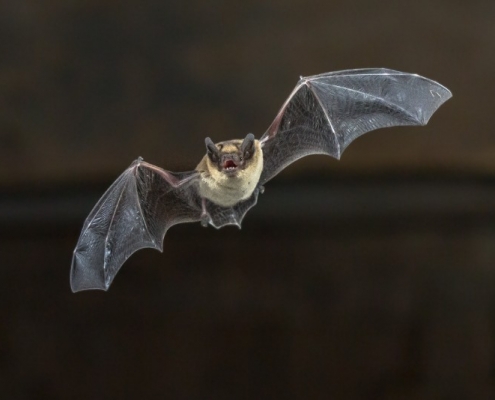
Bats are
curious creatures. They are the only group of flying mammals. They are not
birds or rodents. Public perception of these animals has been based largely
on myth and villainization. People seem to be learning more about bats and
their habits. Bats are actually quite helpful to man by consuming tons of
insects nightly many of which are pests for us and our crops. They do not
attack people. They do not get tangled in your hair or drink your blood.
They are not blind. Bats use echolocation to interact with their environment
and to hunt. They do this by bouncing sound waves off of objects and potential
prey giving them a clear picture of their surroundings in total darkness.
Bats do occasionally become pests themselves by roosting in structures. They can cause severe odor problems when droppings are allowed to build up. Their droppings can host a fungus that causes the respiratory disease, Histoplasmosis. They carry various ectoparasites such as fleas, ticks and bedbugs that can infest a building occupied by bats. The greatest potential threat is that of rabies. Although less than half of one percent of bats worldwide carry the rabies virus, the threat of human exposure from bats is very real. According to the CDC, bats cause the most cases of rabies in humans. Bats infected with rabies most often become sick, exhausted and incapable of flight. This is when children or unsuspecting adults can get bit and infected with rabies. Never pick up a sick bat with your hands!
There is a safe method to remove a bat from your living space. Get a large coffee can or bowl and a piece of cardboard. Place the can over the bat and slide the cardboard under it trapping the bat inside. You may then take it outdoors and release it.
Control methods: Exclusion only! We inspect for all visible gaps, cracks, crevices or voids. Bats need only a 3/8" gap to enter a structure! After sealing all secondary possible entries, we employ bat release valves over their main entries so that the bats can go out at night and not regain entry upon their return. They simply have to find a new roost!
back to menu
Snakes
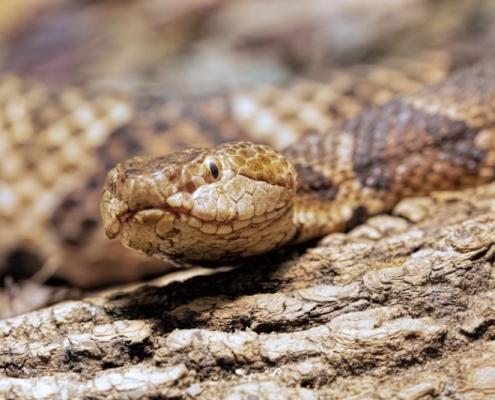
There are over 40 species of snakes in Georgia. Only six of these are venomous. They are the three types of rattlesnakes (diamond back, timber or canebrake and pigmy), cottonmouths or water moccasins, copperheads and coral snakes. All other types of snakes found in the state are virtually harmless to humans. The most common snake in Georgia associated with houses and other structures, is the Rat snake. There are several species of rat snakes, but the most common in the state are the black and gray. Rat snakes like many other non-venomous snakes will vibrate their tail when agitated. When they do this in leaf litter or against a wall, most people instantly think RATTLESNAKE!
It is important to note that snakes exhibit extreme color variation. One specimen does not always look identical to the next of the same type. They also exhibit variation in patterns or markings. Be cautious around snakes and always give them a clear path to escape. DO NOT try to kill any snake you see in the yard! Going for the hoe would be your first mistake. This is the type of encounter that people are most often bit. Snakes play a vital role in controlling rodent and insect populations. Even venomous snakes are good for the environment and habitat that they dwell in. Try to enjoy the glimpse of a snake you get around your property, the chances are great that you will never see that snake again!
Control Methods: Inspection of structure and property. We hand collect any snake found on site. Habitat modification, exclusion and repellents are potential means to help with future problems.
back to menu
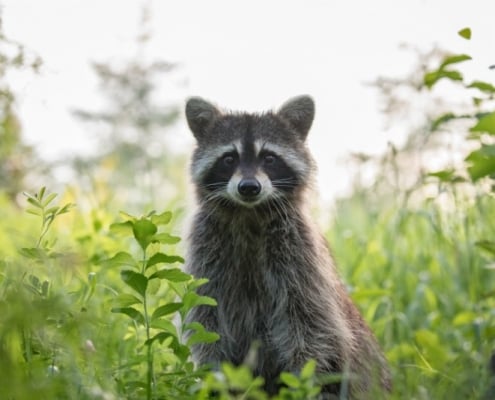
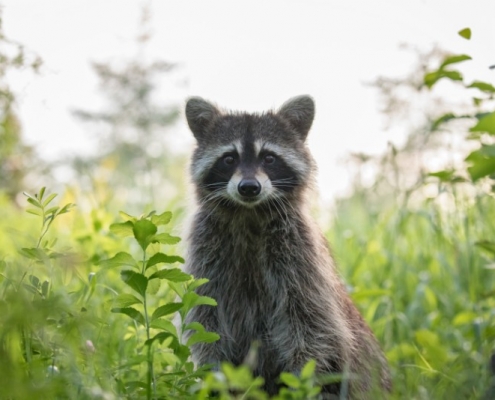
Raccoons
Raccoons
are primarily active at night, or nocturnal. Usually mating in December or
January in the south, females give birth to litters of 1-7 after a gestation
of 60-73 days. The young stay with the mother for one year. Raccoons are crafty
animals. Their human like front paws allow them to climb and manipulate objects
very well. They can easily pry or tear through many types of building materials.
They often nest in attics where they find a safe controlled environment to
have their young. They are well known for raiding trashcans in the night.
These animals are omnivorous, eating most any food that presents itself (including
your trash).Control Methods: Inspection to identify all possible entries, trapping and exclusion to prevent future problems.
back to menu
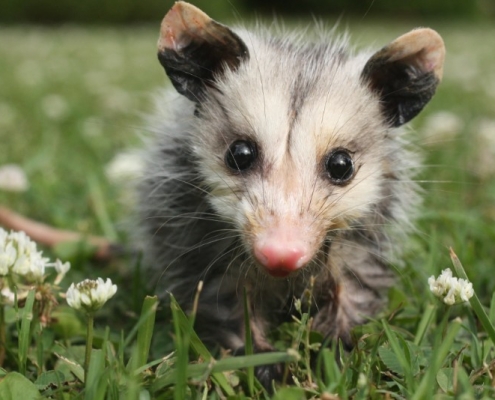
Opossums
Opossums
are nocturnal animals, primarily active at night. They are the only marsupial
(pouch bearing) mammal in North America. They have an amazingly short gestation
of 13 days, at which time up to 14 young crawl into the pouch and attach to
a nipple for the next two months. The young are usually weaned after 100 days.Opossums can be quite intimidating when confronted or cornered. They will hiss, growl and possibly bite if adjitated. Most often they are putting on a show and do not want a quarrel. Did you know that when "playing opossum" these creatures actually pass out from fright? It's like a physiological switch is flipped in the brain, and they just shut down. This usually confuses its adversary and they leave. When the opossum awakes and sees that the danger is gone, they flee to safety.
Opossums usually become a nuisance when they take up residence in an attic or crawl space. Being a scavenger of carcasses and professional trashcan raiders, they often smell quite foul.
Control Methods: Inspection to identify all possible entries, trapping and exclusion to prevent future problems.
back to menu
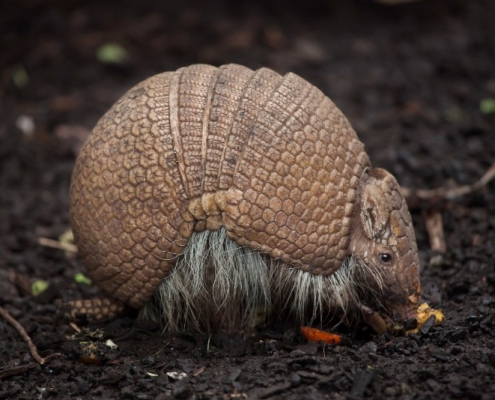
Armadillos
Georgia in recent
has seen a boom of migrating nine-banded armadillos. They seem to be expanding
their range far faster than any other mammal in recent history. They can be
found in over two thirds of the state now, only the northern portions of the
state remain armadillo free. It appears to only be a matter of time before
they reach all corners of the state.Nine-banded armadillos have four identical babies in March. The young stay with the mother for the entire summer. They become sexually mature after one year. These animals primarily feed on soil dwelling insects, but their diet may also include plant matter, baby mammals such as rabbits, carion and eggs of ground nesting birds.
Armadillos can reek havock in well manicured landscapes. Areas that receive plenty of moisture such as lawns and plant beds are perfect feeding grounds. The soft soil is relatively easy to dig in and contains a rich assortment of food sources. Damage associated with armadillos includes small cylindrical holes dug in clusters where they forage and you may see large burrow holes where they den. They usually have more than one burrow in their home range.
Control Methods: There are many suggested control methods for these creatures. You may try repellents, exclusion fences or controlling food sources. Each of these methods has their share problems. Currently, AWL only traps for armadillos. They can be tricky to catch, but you can see and account for the success achieved with this method. They may move back in one day, but trapping often solves the problem for good.
back to menu
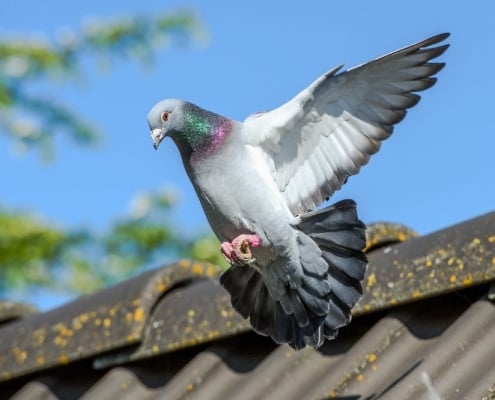
Birds
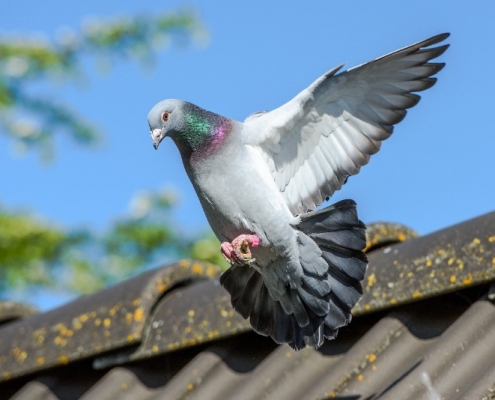
Many different
birds cause nuisance problems. The most common problems are caused by three
species: Pigeons, English sparrows and European starlings. Many birds cause
minor seasonal irritations for people. Male Cardinals love to pick fights with their reflections in windows or brass door kick plates. Territorial mocking birds and other species have been known to "dive bomb" and torment people and most any animal that gets too close to their nest site. Woodpeckers drum on metal chimney caps and bonnets. Sometimes woodpeckers or nuthatches will excavate cavities into exterior walls to nest in. Wood, stucco and drivit are all susceptible to the birds drilling. Many species of woodpecker will also drill on wood siding in search of carpenter bee larvae and other wood boring insects that may have infested siding. The most frustrating part for most homeowners is to learn that these birds enjoy federal protection. FEAR NOT! In most cases these birds can be deterred without harm.
Bird droppings can be hazardous to your property. They can deteriorate almost any type of building material. Steel, iron, wood, marble and stone are all susceptible to damage from uric acid in these droppings. If allowed to accumulate, bird droppings can damage roofs, clog drains, discolor paint, corrode I-beams and short out electrical equipment. There are many documented, transmittable diseases associated with bird droppings. Some of these diseases include: Typhoid, Salmonella, Tuberculosis, Histoplasmosis, Encephalitis, Meningitis, Pox, Eyeworm and many more. Diseases associated with bird droppings can either be ingested by food or drink that has been exposed, or by inhalation of air borne diseases. Ventilation systems can pull fine dust particles containing diseases from the droppings straight into the air space within a structure, rendering it unsafe. Furthermore, accumulations of droppings on floors can render walkways slippery and unsafe posing liability issues.
Contact us to find out how we can help with bird problems the options are almost as plentiful as the situations they get into.
back to menu
Beaver
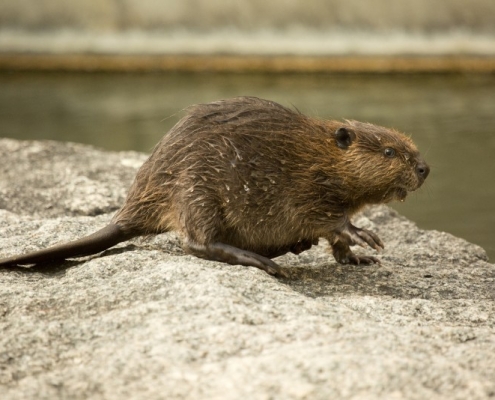
Beavers
mate in the months of January and February. They have one to eight offspring
that stay in the home range for about two years. After this period, they disperse
to seek out new home ranges of their own. Adult beavers can easily reach four
feet in length and over 60 lbs. in weight. Beavers have a unique anatomy adapted
for life in the water. They have flaps of skin in the ears and nose to keep
water from entering. They also have a unique flap of skin behind the front
teeth that keeps water out of the throat while chewing under water. They have
a special respiratory system that allows them to remain under water for over
twenty minutes. These industrious rodents cause obvious damage to manmade waterways, valuable timber and ornamentals. They can compromise the integrity of contained water systems, resulting in undesirable flooding. In some settings, they can dig into man-made dams leading to erosion of the dam and possible draining of the pond or lake. If left undisturbed, beavers will change entire ecosystems to suit their desired habitat.
Control Methods: Trapping the beavers currently causing the damage is the best method of control by far. You can use fencing to exclude certain areas. Wrapping the trunk of targeted trees with hardware cloth or metal will help deter beavers from chewing on them. You need the wrap to be as close to the ground as possible, and about three to four feet high.
back to menu
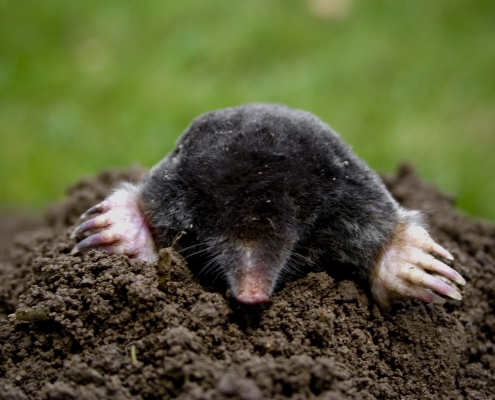
Moles
Eastern
Moles are the most common in Georgia found in (or under) manicured lawns.
These moles are roughly 5-7 in. in length. They have no external ears and
tiny, insignificant eyes. Their large front feet are equipped with thick,
sharp claws for digging. The fur is short and very soft, usually silver-gray
in color. They have short stubby tails. Moles produce one litter each year
in the spring. They have 2-5 young after about a five week gestation. The
young leave the nest after about four weeks and stay with the mother for a
short period. These animals are solitary for most of the year until breeding
season.Spending the majority of their life underground, moles have two different tunnel systems. They have feeding tunnels near the surface, and lower tunnels that range from roughly 5 ?" to 24 ?" deep. The lower tunnels are permanent and used for nesting and moving from one feeding area to another.
Control Methods: There are many products on the market designed to solve mole problems. Most of them provide little to no results. Trapping is the most effective method to solve a mole problem.
back to menu
Rats
There are two types of rats commonly found in structures in Georgia Norway rats and roof rats. The Norway Rat (Rattus norvegicus); is also known as brown rat, sewer rat or warf rat. These rats are stout bodied rodents with thick tails shorter than the length of the body. These rats eat almost anything but prefer meat. Norway rats reach sexual maturity in three to four months. While the number of young varies among sources, the most common number is 2-14 (averaging 8) per litter. The young are born after a 22 to 24 day gestation period. Around 18 hours after giving birth, the female enters a postpartum estrus and can breed again. The average female is capable of reproducing seven times per year.The roof rat (Rattus rattus) also commonly known as black rat, fruit rat or ship rat is often more slender than it's bulky cousin. They have tails that are usually one and one-half times the length of the body. These rats eat mostly fruit and grains, but being opportunists, will eat most any food that presents itself. They display similar reproduction to the Norway rats. They are sexually mature around four months, producing an average of eight per litter.
Other species such as cotton rats (Sigmodon hispidus) can be found in houses, yet they are less common. Rat infestations are more common than many people think. They will usually only occupy the crawl space, attic or both. It is less common to have rats enter the living space, but when this does occur it is usually due to an available food source. All rats are opportunistic. When they find a food source they readily exploit it.
Rats are amazing creatures. They can jump over four feet high and at least three feet laterally. The insicors (front teeth) grow continually so rats need to constantly knaw on things to keep the teeth filed down. The rat's jaws are extremely powerful, capable of exerting 23,000 pounds of pressure per square inch (OUCH!). Rats can swim submerged for up to three minutes and tread water for three days!
Control Methods: Inspection to identify all possible entries, trapping and exclusion to prevent future problems.
back to menu
Stinging Insects
There are many species of stinging insects in Georgia. Proper identification of your targeted pest is the first step in solving the problem. Of course, not many people want to get close enough to make a proper I.D. Some of the most common stinging insects we see around (or in) structures are wasps, yellow jackets, honey bees, carpenter bees, bumble bees, cicada killers and several species of hornets. We occasionally receive complaints for more obscure stinging insects. We will provide some pictures for identification and limit the amount of bio-information on these creatures. Please search the web for more informative sites pertaining to these interesting insects.
back to menu
Bees
Honeybees are fascinating creatures with extremely complex social structures. Bees are very important pollinators and should be conserved. Sometimes honeybees build hives in structures and end up in human dwelling spaces. While honeybees are usually rather docile, this can be a potentially dangerous situation.Many people are both surprised and intimidated by the sight of swarming bees in spring months. Seeing a large clump or ball of bees hanging on a branch or other suitable gathering area is quite a sight! In the spring, new queens emerge. These new queen bees will take roughly half of the bees from their hive and find a place to create a home of their own. When the bees are in this transition phase, they are called a swarm. They are vulnerable in this state and most often disappear as quickly as they showed up. It is usually not necessary to bother swarming bees unless they are causing a legitimate threat to human safety, near a storefront or around children's play areas are examples. When bees take up residence with you, it may be a different story. Honeybees work all summer long to create as much honey as they can. This is their winter food source. Left undisturbed, a hive will continue to grow year by year. Unlike many of the other social stinging insects, most bees live through winter safely in the hive eating honey.
Carpenter bees bore into wood siding. These hardy bees can be very intimidating, often in rather large numbers around one house. The truth is that these bees are quite harmless to you. They very rarely sting people without being provoked. Your home however, is not as fortunate. These bees drill cavities and caverns in wood siding and deposit eggs. Once woodpeckers find them, your home may begin to resemble a block of Swiss cheese. This can lead to serious repair costs if left untreated.
back to menu
Wasps
There are
several species of wasp in Georgia. Most of the ones that colonize have an
open-faced nest. You can see the individual cells on the nest. If left undisturbed
they are usually docile. They can become aggressive if admitted.back to menu
Yellow Jackets
Usually nesting
in the ground, unsuspecting people are most often stung when stepping on or
over the entry to the nest. Yellow jackets will also nest in wall voids, soffit
boxes and other confined spaces in structures. They can be found nesting well
above the ground, dispelling the myth that they only nest under ground. Yellow
jackets are usually docile when foraging well away from the nest, but they
are almost always aggressive near the nest. Take great care around these insects!
We unfortunately hear too many stories of trips to the emergency room every
summer due to multiple yellow jacket stings. back to menu
Hornets
The most common species
found in Georgia is the bald-faced hornet. So called for the predominately
white face on a mostly black body. These are the hornets that build the traditional
dark gray, inverted teardrop shaped nest. Other species found in Georgia are
European hornets and giant hornets. These insects are very aggressive around
the nest.back to menu